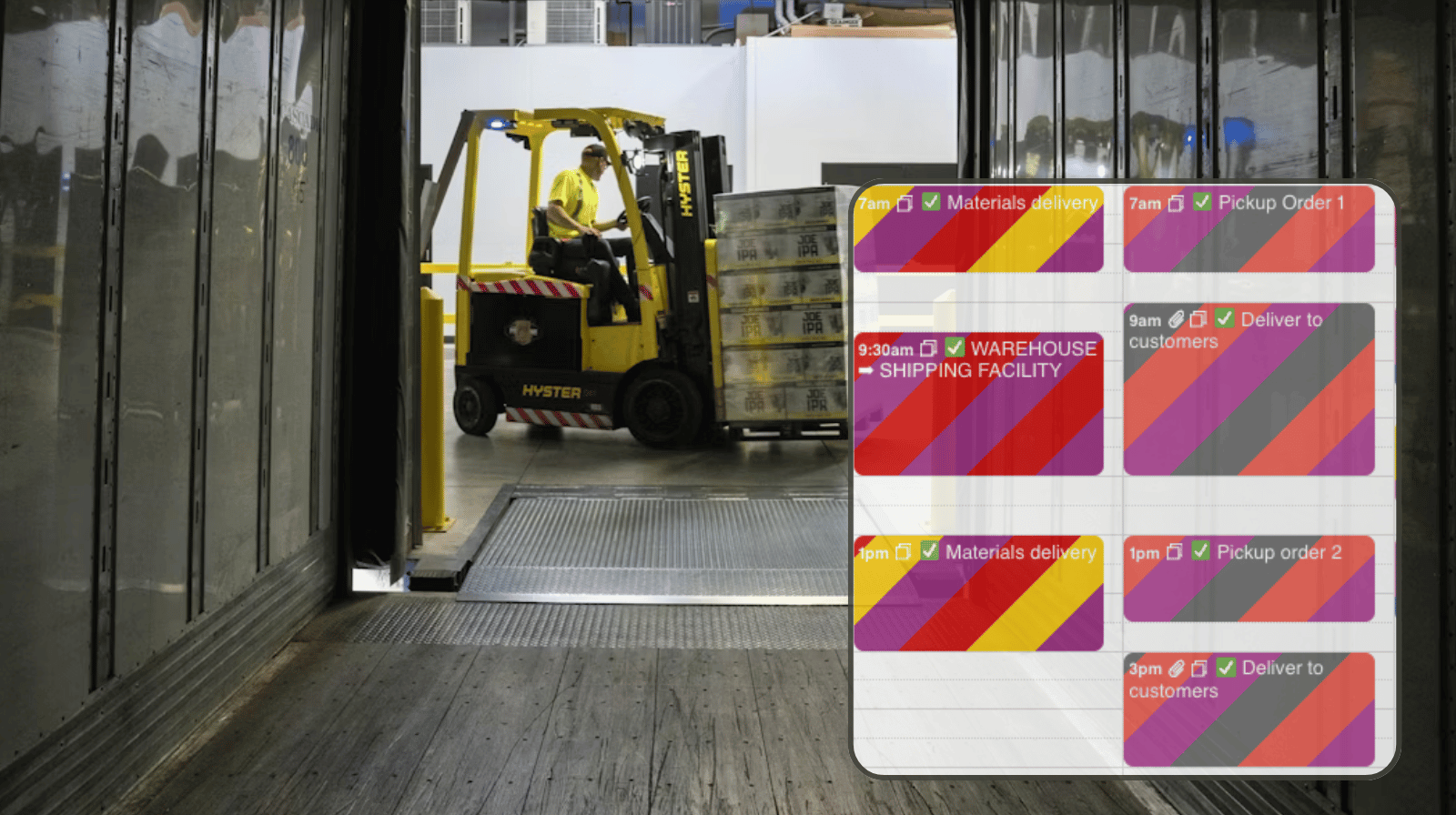
Transport planning involves more than assigning a driver to a job. Dispatchers must coordinate orders, loading times, vehicles, drivers, and customer expectations. A shared logistics calendar gives planners, drivers, and customers a clear overview so everyone involved in the transport chain works from the same plan.
The need: Transport planners must coordinate orders, loading times, drivers, and customer expectations while keeping employed drivers, hired drivers, and clients aligned on the same schedule.
The Teamup solution: A shared logistics planning calendar that keeps each transport job organized, gives drivers a clear view of their assignments, and provides synced timing updates for customers.
The need for accurate, detailed transport planning
Coordinating transport jobs often involves working with customers who need goods picked up and delivered at specific times. These customers rely on accurate timing for their own operations. Meanwhile, dozens of drivers rely on the plan to know where they should go and when.
On a busy day, the planner may coordinate 40–50 people connected to the schedule, including:
- Dispatch planners.
- Internal drivers.
- Contracted drivers.
- Warehouse staff.
- Customers waiting for deliveries.
With so many dependencies and details, even small misunderstandings can disrupt the schedule. That’s why it is so important to work from a centralized system. One shared, accurate operational view allows coordinators to work from the big picture, while keeping every person updated on the details that matter for their role.
A calendar that connects the entire transport chain
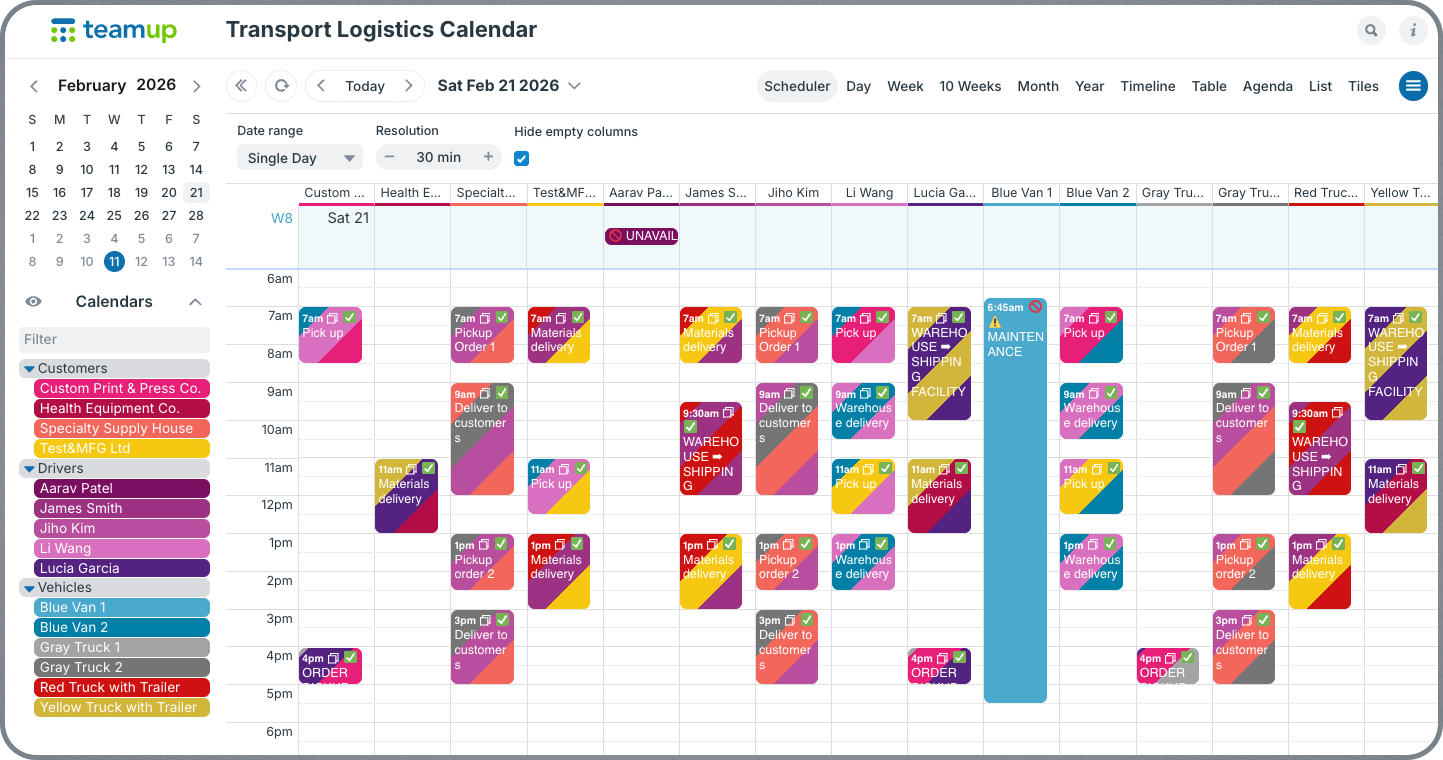
Click to enlarge: An overview of the entire transport chain including customers, drivers, and vehicles.
A shared logistics calendar creates one visible plan for everyone involved in the transport process.
- Instead of tracking transport assignments in multiple tools, the coordinator adds each job to the calendar, assigning a driver and available vehicle.
- Drivers open the calendar and immediately see who they are driving for and when the vehicle should be loaded.
- Customers can also receive secure, limited access to the same schedule. This allows them to follow the planned transport timeline without needing to request updates.
Customized visibility for drivers and customers
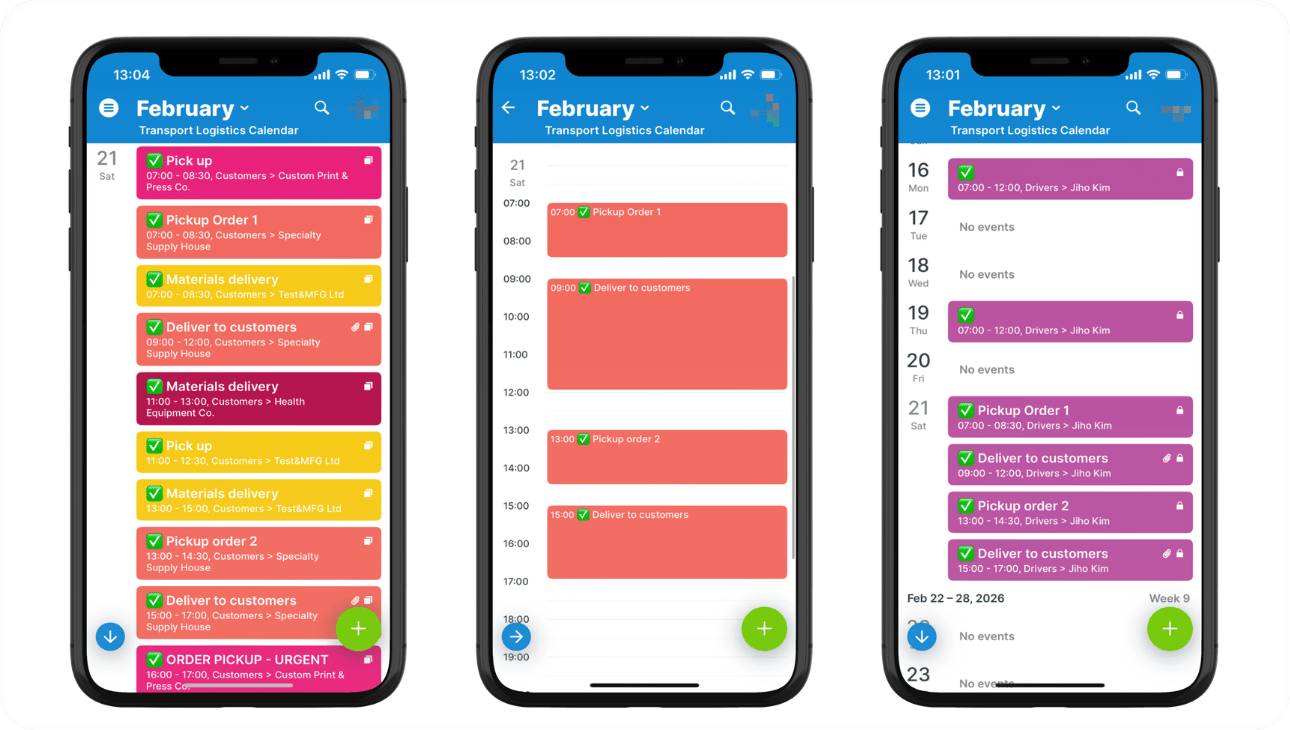
Click to enlarge: (Left) Supervisor’s view toggled to show only customer sub-calendars; (Middle) A customer’s view shows only their pickups and deliveries; (Right) A contracted driver’s view shows only his assignments.
In a shared logistics calendar, the same transport plan can be visible to planners, drivers, and customers, but with different levels of detail and access.
Employed and contracted drivers
Many transport companies rely on a combination of full-time drivers and contracted drivers who assist when demand is high.
This creates an additional coordination challenge. Each driver needs access to the information they require, but not necessarily everything. The answer: Individually customized access to the calendar, as appropriate for each person’s role.
- Internal drivers may have read access to all jobs scheduled that day.
- Hired drivers may see only the assignments relevant to them.
- Dispatch planners maintain modify access to create and adjust schedules.
- Customers receive read-only access to see the timeline of their deliveries.
By structuring the calendar this way, the planner can share the operational plan widely while still controlling who can change it.
One-off and regular customers
It’s helpful to keep customers informed of their delivery timeline. They know what to expect without calling the office, so there’s less communication workload. The key is setting up each customer’s view so they only see what’s relevant for them.
Depending on the type of customer relationship, planners can choose the simplest and most appropriate way to share information. Sometimes a single job needs to be shared. In other cases, customers place regular orders and benefit from seeing all their scheduled transports in one place.
Two ways to share delivery schedules with customers
- For customers with a single transport job: Share an event page link for that delivery. The customer receives a read-only view of that event only. Updates remain live-synced as the schedule changes. Event field visibility can be controlled so customers only see the appropriate information. The event comments can be used for driver updates or for the customer to ask questions, give feedback, or add instructions.
- For regular customers with frequent orders: Create a dedicated sub-calendar for that customer. Each transport job for that client is added to their sub-calendar (and can also be assigned to other calendars such as the driver or vehicle). The customer receives read-only access to view only their own sub-calendar. They can see when deliveries or pickups are scheduled, but can’t see which driver or vehicle is assigned.
A clearer way to manage transport operations
For logistics planners, visibility is everything. When orders, drivers, loading times, and delivery schedules are organized in one shared system, coordination becomes much easier. Drivers see their assignments clearly, customers gain transparency into the schedule, and planners maintain control of a complex operation involving dozens of people.
Teamup helps transport teams manage this shared workflow with flexible access control, real-time updates, and a clear overview of the entire logistics plan. Create your own calendar to organize transport planning and keep drivers, planners, and customers aligned.
Related resources
- How to let fleet drivers add notes in real-time
- Coordinate fleet dispatch and vehicle maintenance in one calendar
- Maintain clarity on vehicle availability for your fleet
- Learn more about customized access and configuring field visibility
- Automatically prevent double-booked vehicles or drivers