

Many medical and healthcare clinics run on tight, full days where timing matters. Appointments stack closely. Rooms turn over quickly. Providers move from one patient to the next with little buffer. When everything lines up, the day runs smoothly. But a single missed booking or overlooked scheduling conflict can throw the entire schedule off.
The challenge: Coordinate provider schedules, room availability, and appointments accurately in busy clinics where even small conflicts can cause delays and disrupt patient care.
The Teamup solution: Unified clinic scheduling in one shared calendar that coordinates providers, rooms, and appointments with automatic conflict prevention..
The complexity of clinic scheduling
Clinic scheduling involves many factors, like provider schedules, room availability, and equipment use. When these different aspects are managed separately, small assumptions can develop into significant problems.
A brief overlap in room usage may not seem significant. However, if a provider’s schedule is packed, it can lead to a delay in care, extended how long the room is taken. This overlap means the next patient’s care starts late, creating a ripple effect of further delays.
A unified approach to provider and room availability
Unified scheduling eliminates constant reconciliation. When provider and room availability exist in the same system, coordination happens automatically.
This shift lightens the administrative load in three main ways:
- One source of truth: Staff no longer compare multiple calendars to check availability.
- Conflict prevention built-in: Double-bookings are blocked automatically, not caught later.
- Fewer corrections and callbacks: Fewer errors lead to fewer reschedules and follow-ups.
Instead of reacting to conflicts, staff can focus on booking confidently and maintaining patient flow.
How to structure clinic schedules in one system
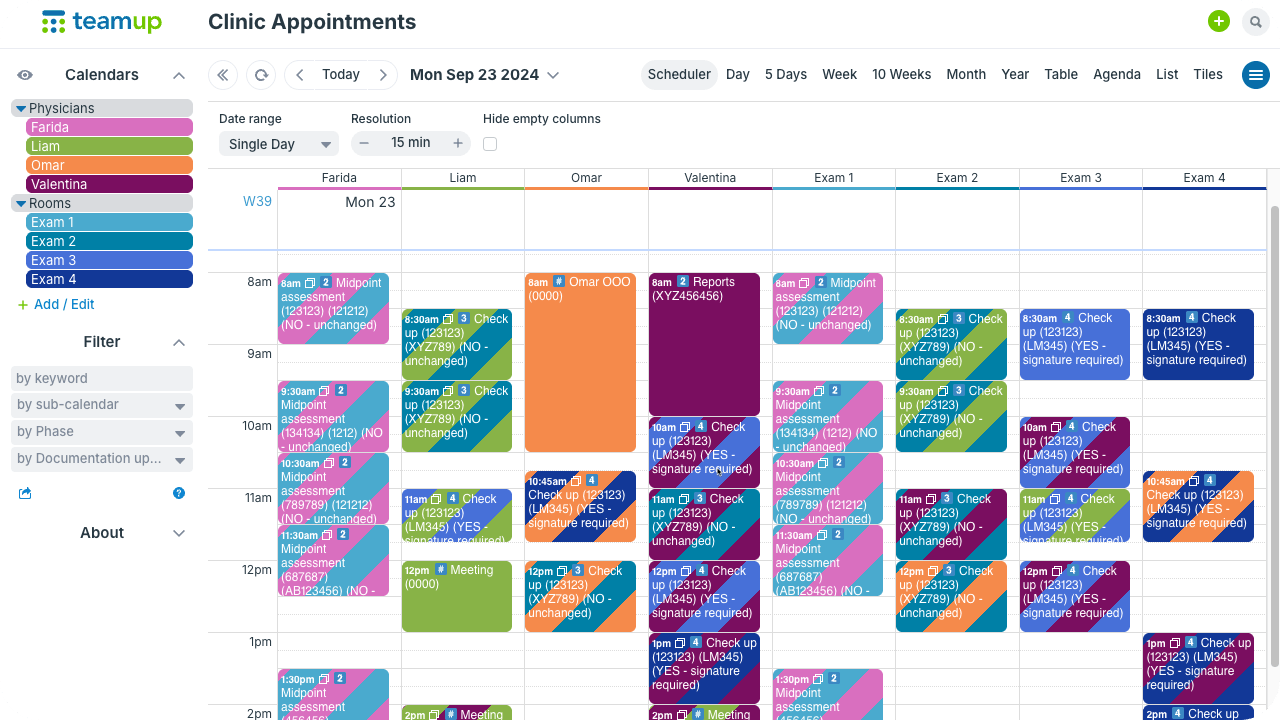
Click to enlarge: Scheduler view shows each calendar in its own column for side-by-side comparison of appointments and availability.
Structuring clinic schedules in one system starts with organizing availability in a clear, consistent way.
Provider and room sub-calendars
Each clinician and room has their own sub-calendar. Appointments are created with both assigned at once, ensuring availability is checked together.
Automatic conflict prevention
If a provider or room is booked, Teamup prevents overlapping appointments. Conflicts are stopped during scheduling, not discovered later.
Shared visibility for staff and managers
Front-desk teams, clinical staff, and operations managers all use the same calendar. Changes are visible immediately, reducing back-and-forth communication.
Faster adjustments with less risk
When schedules change, staff can see the full impact before making updates. This prevents the errors that often follow manual adjustments.
Less admin work and smoother days
A unified system for clinic scheduling does more than stop double-bookings. It removes hidden labor from clinic operations. Staff spend less time checking, correcting, and explaining. Schedules become more reliable. Patient flow improves as appointments are based on accurate availability from the start.
Related resources
Get started with a Teamup calendar to bring clinic scheduling into one system.