Calendar Visualization, Featured, Product Tips
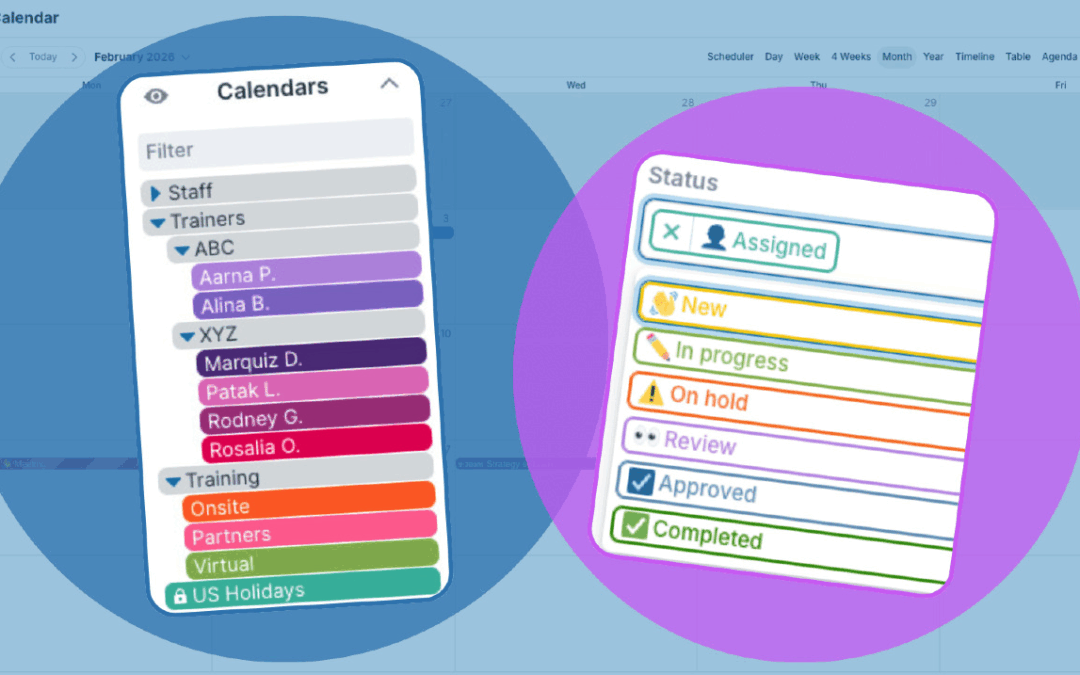
One of the first steps in setting up a calendar is to define its structure. Thoughtful structure, with clear organization and visual cues, makes the calendar easier to use so teams work more efficiently from the start. Calendar structure is the underlying framework...
Calendar Visualization, Featured, Product Tips
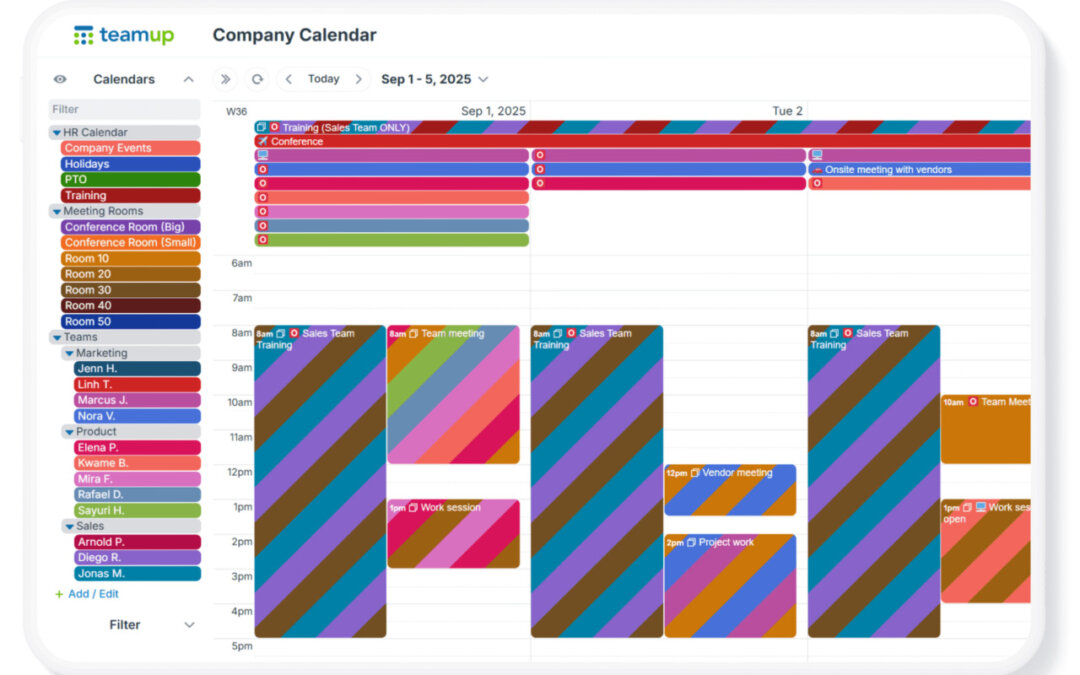
When you create a Teamup calendar, you’re creating a master calendar. That master calendar can contain many sub-calendars. Typically, a bigger or more complex organization (or project) means you’ll need more sub-calendars. Also, as teams grow, scheduling...
Calendar Visualization, Product Tips
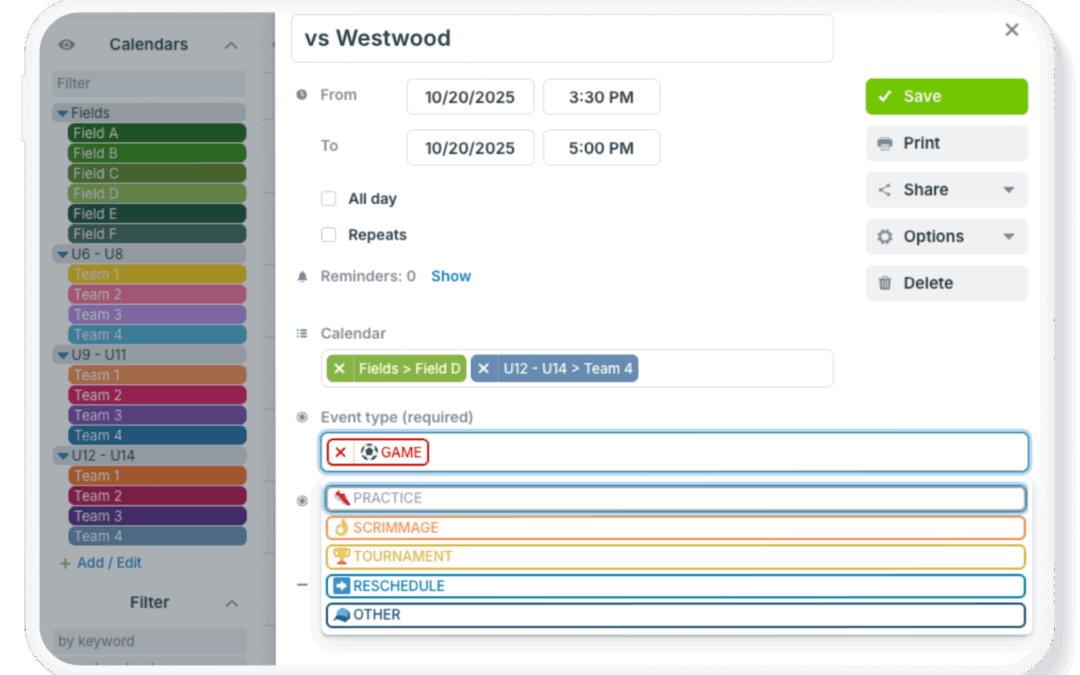
Complex scheduling often means tracking many details for each event. Locations, resources, teams, phases, and event types can all be important. Keeping this information organized and easy to use can be tough in many standard calendars, which don’t provide...
Interactive Demos, Product Tips
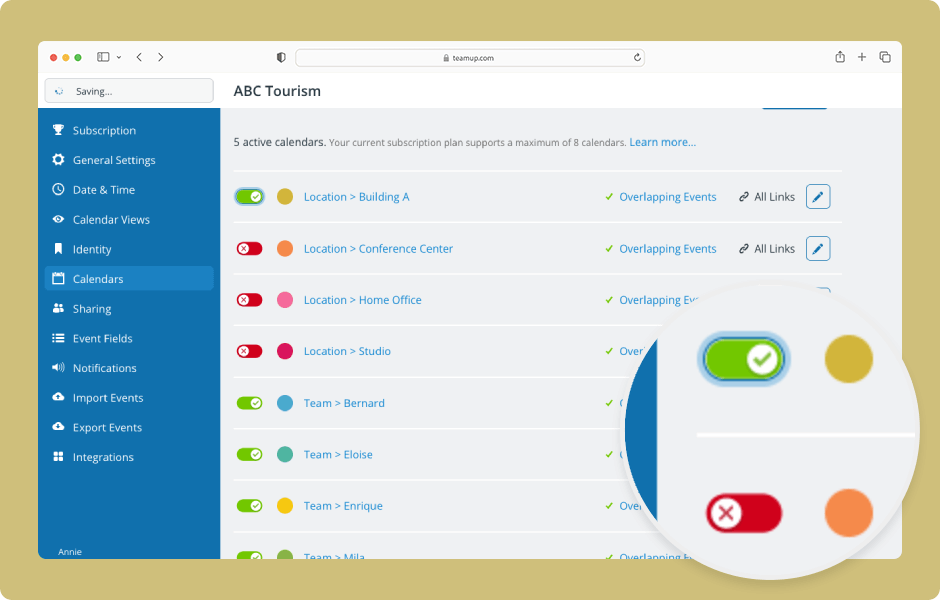
The data on deactivated sub-calendars or event fields is not lost, only archived. To access it, reactivate the sub-calendar or field. ENLARGE DEMO Access level required: Administrator Open your calendar in a browser and click the blue menu (top right). Select...
Information Visibility, Product Tips
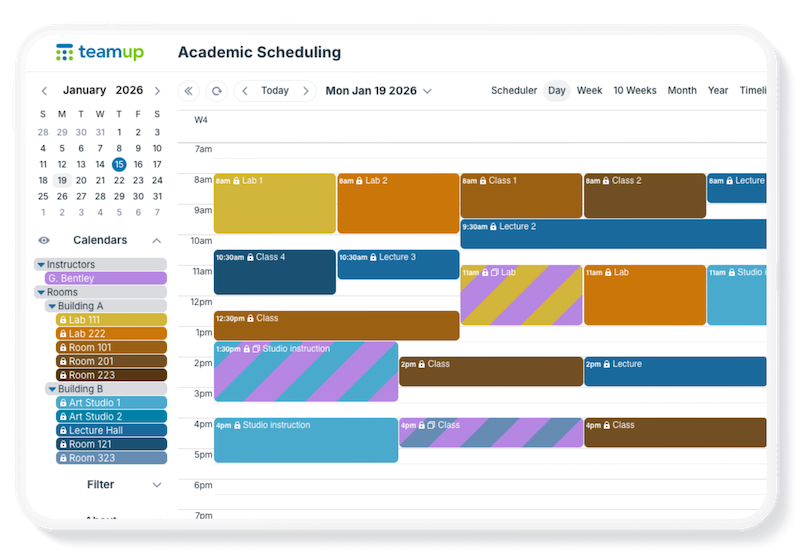
A calendar’s structure determines how a calendar is organized. With Teamup, you can build a multi-dimensional structure using both sub-calendars and custom fields to bring all the scheduling factors together. But it can be tricky to decide whether a particular...