
Agencies often need to share project timelines with clients, but in a limited way. The challenge is sharing that schedule without exposing internal tasks, team coordination details, or operational notes, and without creating extra work to maintain separate updates.
The need: Provide clients with clear project timelines, campaign milestones, task details and meeting schedules while keeping internal planning details private and avoiding manual updates or duplicate schedules.
The Teamup solution: A shared calendar that allows agencies to manage full internal project planning while providing clients a limited, secure read-only view that shows only their milestones, deadlines, and deliverables.
Useful for marketing agency managers, digital marketing teams, account managers, campaign coordinators, and project managers.
Challenge: Sharing timelines without exposing internal work
Clients expect visibility into progress. They want to know when creative assets are due, when approvals are scheduled, and when campaigns go live. When agencies provide a clear timeline, clients feel informed and confident in the process. This visibility reduces status emails and improves alignment.
However, agency calendars often include internal workflow steps that are not client-facing. Draft reviews, vendor negotiations, internal feedback loops, and staffing allocations are part of execution—but not part of the external narrative. Sharing these details can create confusion or invite unnecessary scrutiny.
Rather than creating separate tracking systems, agencies benefit from structuring one calendar that supports different levels of visibility.
Solution: One timeline with controlled visibility
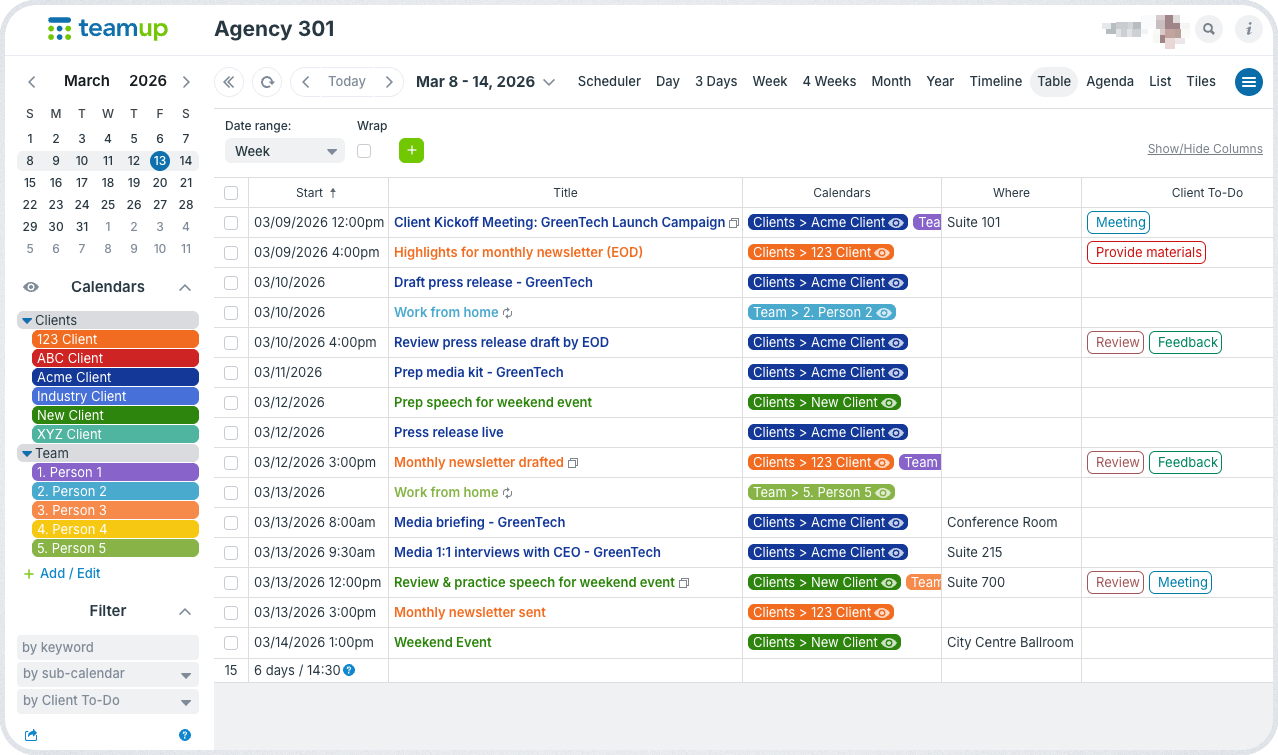
Click to enlarge: Team members at the agency can view all events and tasks for all clients. Table view makes it easy to scan details quickly.
Table view (shown above) provides a spreadsheet-style layout that makes it easy to scan across event details in one place. (Be sure to check out other calendar views, too: They provide different perspectives and levels of detail to help make tasks easier and work more efficient.) Internal team members can work efficiently, while only approved milestones are shared with clients:
- Use milestone-based events for client-facing deliverables.
- Create internal task fields that are visible only to modify users.
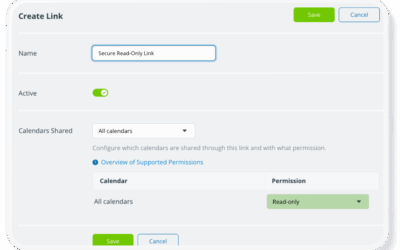
- Provide read-only access to clients so they can view timeline progress without editing rights.
- Organize by campaign or account to simplify filtering and sharing.
This structure allows the agency to maintain control of internal execution while presenting a professional, streamlined timeline externally.
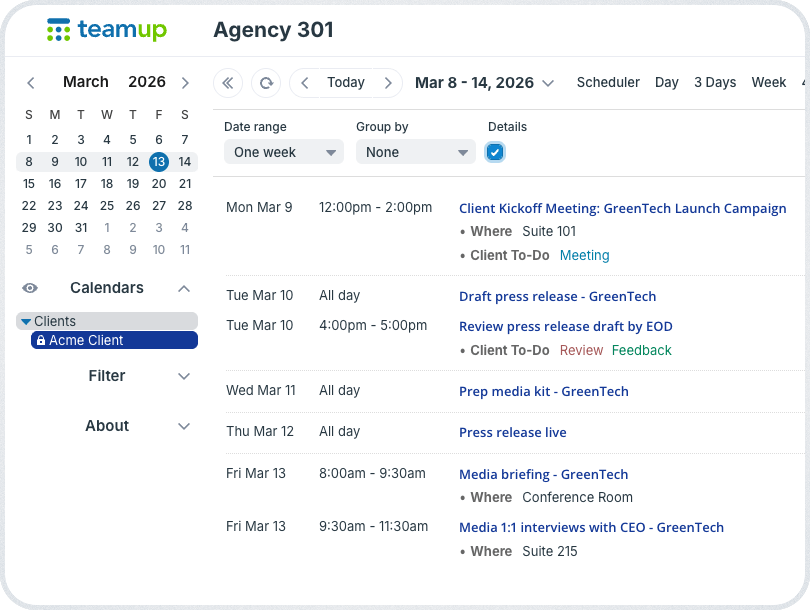
Click to enlarge: Each client gets customized access to the calendar showing only their own events, project milestones, meetings, and tasks.
⚙️ How to set up a client-facing project schedule
- Use separate sub-calendars for each client, organized in folders.
- Add custom fields with visibility control for both Internal Notes and Client Notes.
- For the Internal Notes field: The visibility should be set to modify-users only.
- For the Client Notes field: The visibility should be set to all users.
- 👉 Learn more about building a flexible calendar structure with sub-calendars and custom fields.
- Create events on the appropriate client sub-calendar for the major timeline phases, milestones, and deliverable dates you want to share with the client.
- Set up customized calendar access: Give each client read-only access to only their own sub-calendar.
- Clients can view their own project schedules easily on any browser or the Teamup app.
Results: Project transparency without internal exposure
Clients gain clear visibility into campaign progress and upcoming milestones, while agencies keep internal planning details private. Because the calendar updates automatically as work progresses, there’s no need to send manual status reports or maintain separate client timelines. Clients can check the schedule anytime to see what’s coming next, making communication simpler for everyone involved.
Create an agency calendar with organized projects and layered visibility so clients see milestones, not internal task management.