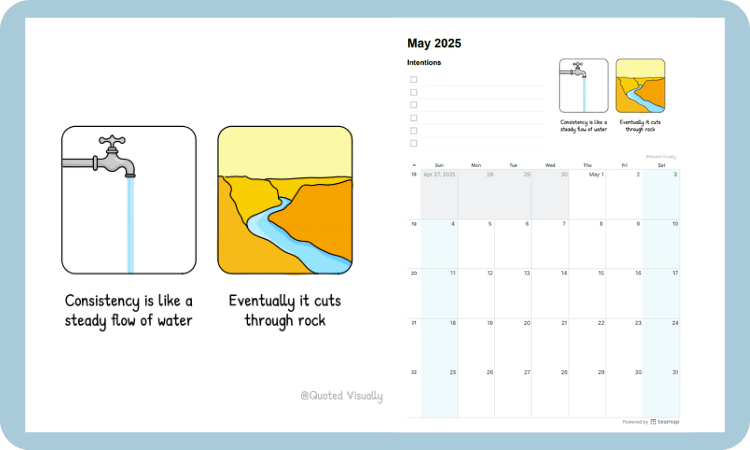
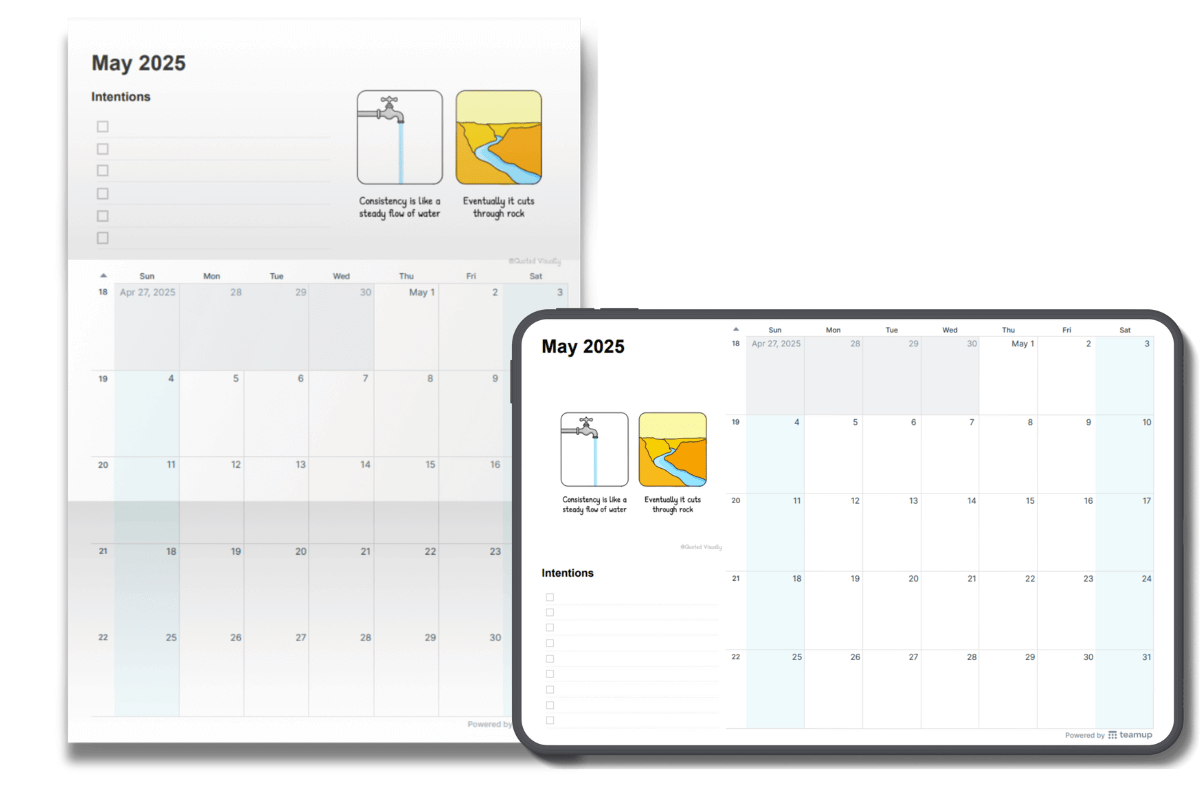
Consistency is like a steady flow of water. Eventually, it cuts through rock. Stay motivated with our May illustrated calendar, available to download and print in portrait or landscape. See our complete collection of 2025 printable calendars for even more options.
A fast-paced, constantly connected culture tends to notice and celebrate big wins—overnight successes, viral moments, and major achievements. It’s easy to get caught up in these ambitions and spend our time in pursuit of the next shiny goal, thinking that’s what makes life meaningful.
Reaching a big milestone does feel great, but a meaningful life isn’t based on one-time achievements. Recognition, accomplishment, and applause have their moments. We can enjoy them when they come. But meaning comes from what we do every day: the relationships we nurture, the work we do with care, the hobbies that ground us, and the small ways we help our communities, connect with nature, or grow personally.
These daily activities and interactions are what bring lasting joy and purpose. The key to nurturing them is consistency. It may not seem impressive at first. But eventually, it shapes everything.
How consistency nurtures what matters
Consistency isn’t about grinding harder or being perfect every day. It’s about showing up—again and again—for the things that matter.
Deepening relationships
Texting a friend just to check in. Eating dinner with your partner without screens. Calling your mom every Sunday. Small, everyday moments create trust and points of connection that matter more than an occasional big gesture. Consistency communicates: “You matter to me.”
Mastering a craft
Whether it’s a hobby, a vocation, or a career, any craft you pursue benefits from regular practice. Talent might be what spurs your interest, in the beginning. But developing that talent into mastery comes from consistent attention. Skills are something you develop with repetition, so they slowly become second-nature. And that’s when satisfaction deepens and new ideas spark. When you’ve been consistent with your craft, you can lose yourself in flow and let creativity carry you.
Building healthy routines
A session on the yoga mat every morning. A short lunchtime walk. A few minutes of meditation. Done daily, these grounding habits help nurture physical health and create mental clarity, emotional balance, and a sense of agency. The routine becomes your anchor, helping you maintain steady rhythms even through change or crisis. Plus, these small but consistent habits give you moments to check in with yourself. Instead of rushing through unpleasant or stressful times, you can process and pay attention to what you need in each moment.
Connecting with community
Being part of a community isn’t as simple as it used to be. We live largely separate lives, so it takes some deliberate action to participate in the communities that surround us. But doing so contributes to your well-being and lets you become part of something bigger than yourself. Find consistent ways to participate, like volunteering monthly, attending local events, or just saying hi to your neighbors. These tiny acts of presence build real connection and a sense of belonging over time.
What keeps us from being consistent
Of course, all of this sounds good in theory—show up consistently, build a meaningful life. But it’s not always so simple to do.
Because while consistency sounds like a gentle flow of water, living it out often feels more like swimming upstream. We get distracted and tired. We lose sight of why we started. The results don’t show up fast enough to keep us motivated. Distractions grab our attention.
Unrealistic expectations
We often expect quick results. When change doesn’t happen fast enough, we get frustrated and quit. Consistency thrives on patience—impatience kills it. The fix: Focus on progress, not perfection. Track small steps in the right direction and celebrate small wins.
Lack of clarity
If you don’t know exactly what you’re working toward, or why something matters, it’s easy to lose direction or motivation. The fix: Be clear about the benefits, the bigger “why” behind your choices.
Burnout
Trying to do too much, too fast will lead straight to burnout. You can’t improve everything all at once. And sometimes life hands you a big challenge, which might mean other parts of life don’t get the attention you want to give them. The fix: Try to look at the bigger rhythms and patterns of life. Seasons change and phases end. Focus your attention on what you can do in the present.
No structure
Without structure, you’re having to make the same decisions all the time, and fight chaos and inertia just to do a small thing. Structure smooths the path and makes it easier to do what you want to do. Structure can be as simple as a habit tracker, an accountability call, or a recurring scheduled event on your calendar. The fix: Think about how you can support yourself as you build consistency. What makes it easier? Put that in place.
Big achievements are like mountaintop moments—exhilarating! Fun! But also fleeting. Enjoy them, but remember that the the shape of our lives is carved by something slower and deeper. Consistency is the quiet, steady river that runs through it all—through our relationships, our work, our growth. Over time, it shapes the landscape of who we are. The flashy moments might get more attention, but the steady flow of our daily choices and small, consistent efforts is what builds meaning and satisfaction in our lives.